
Note For "Anarchist Morality" This study of the origin and function of what we call "morality" was written for pamphlet publication as a result of an amusing situation. An anarchist who ran a store in England found that his comrades in the movement regarded it as perfectly right to take his goods without paying for them. "To each according to his need" seemed to them to justify letting those who were best able foot the bills. Kropotkin was appealed to, with the result that he not only condemned such doctrine, but was moved to write the comrades this sermon. Its conception of morality is based on the ideas set forth in Mutual Aid and later developed in his Ethics. Here they are given special application to "right and wrong" in the business of social living. The job is done with fine feeling and with acute shafts at the shams of current morality. Kropotkin sees the source of all so-called moral ideas in primitive superstitions. The re...

What is most significant, it seems to me, is the earnest attention paid to the Children and Family as a subject, the desire of parents to be Informed and thereby do their best, rather than following their wit and impulse; or to say this another way, what is significant is the importance assigned in our society to Psychology itself? for Psychology is still by and large the family-psychology that Freud made it discussing the problems of jealousy, infantile dependency authority, submissiveness and rebelliousness, and sibling competition: and problems of spite, moral prejudice and other reaction-formations springing from instinctual deprivation. This interest in the Children is of course hopeful, for the increase of wisdom cannot fail to remedy... (From : http://www.tao.ca/~freedom/goodman.html.)
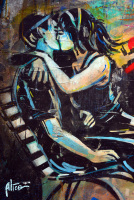
Speaking of Puritanism in relation to American art, Mr. Gutzon Borglum said: "Puritanism has made us self-centered and hypocritical for so long, that sincerity and reverence for what is natural in our impulses have been fairly bred out of us, with the result that there can be neither truth nor individualility in our art." Mr. Borglum might have added that Puritanism has made life itself impossible. More than art, more than estheticism, life represents beauty in a thousand variations; it is indeed, a gigantic panorama of eternal change. Puritanism, on the other hand, rests on a fixed and immovable conception of life; it is based on the Calvinistic idea that life is a curse, imposed upon man by the wrath of God. In order to redeem himself man... (From : Anarchy Archives.)
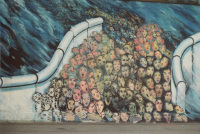
Proposed Roads To Freedom By Bertrand Russell INTRODUCTION THE attempt to conceive imaginatively a better ordering of human society than the destructive and cruel chaos in which mankind has hitherto existed is by no means modern: it is at least as old as Plato, whose ``Republic'' set the model for the Utopias of subsequent philosophers. Whoever contemplates the world in the light of an ideal--whether what he seeks be intellect, or art, or love, or simple happiness, or all together--must feel a great sorrow in the evils that men needlessly allow to continue, and--if he be a man of force and vital energy--an urgent desire to lead men to the realization of the good which inspires his creative vision. It is this desire which has been the primary force moving the pioneers of Socialism and Anarchism, as it moved the inventors of ideal commonwealths in the past. In this there is nothing new. What is new in Socialism a...

We spoke last month of the overwhelming importance of spontaneity as an element in human existence, and of the necessity for meeting it with full recognition. Perhaps it seemed to some of our readers that such inquiries were of interest but to students and dreamers; too curious for the needs of common life. Well, the Belgian Workman's Party left all such merely philosophical considerations out of their reckoning when their Executive Council decided that a general strike must be started "to order," at a time when the leaders should have made up their mind that all Was ready. And so, when the spontaneous impulse came to the miners and metalworkers to free themselves this summer from their intolerable slavery, the leaders and wire-pullers of t... (From : AnarchyArchives.)

"If there's a Government then I'm agin' it!" We are emphatically of the opinion of that oft quoted Irishman. We are opposed to all centralized administration whether of labor or of affairs. We are in revolt against all domination whether of majority or minority. Of course, therefore, we protest, as against means not in accordance with our ends, against every attempt of the popular party to liberate the people by making use of the machinery of Government. All this is true of us Anarchists; is it the whole truth? Is this negative policy of perpetual protest essentially Anarchism? Active protest against evil is certainly better than dull submission to it; but he who whilst protesting against a wrong can point to no right capable of attainment,... (From : AnarchyArchives.)

ESSAY V OF THE REBELLIOUSNESS OF MAN There is a particular characteristic in the nature of the human mind, which is somewhat difficult to be explained. Man is a being of a rational and an irrational nature. It has often been said that we have two souls. Araspes, in the Cyropedia, adopts this language to explain his inconsistency, and desertion of principle and honor. The two souls of man, according to this hypothesis, are, first, animal, and, secondly, intellectual. But I am not going into any thing of this slight and everyday character. Man is a rational being. It is by this particular that he is eminently distinguished from the brute creation. He collects premises and deduces conclusions. He enters into systems of thinking, and combines systems of action, which he pursues from day to day, and from year to year. It is by this feature in his constitution that he becomes emphatically the subject of history, of poetry and fiction.

WHY MEN FIGHT I THE PRINCIPLE OF GROWTH TO all who are capable of new impressions and fresh thought, some modification of former beliefs and hopes has been brought by the war. What the modification has been has depended, in each case, upon character and circumstance; but in one form or another it has been almost universal. To me, the chief thing to be learned through the war has been a certain view of the springs of human action, what they are, and what we may legitimately hope that they will become. This view, if it is true, seems to afford a basis for political philosophy more capable of standing erect in a time of crisis than the philosophy of traditional Liberalism has shown itself to be. The following lectures, though only one of them will deal with war, all are inspired by a view of the springs of action which has been suggested by the war. And all of them are informed by the hope of seeing such political institutions established in Europe as shall ma...