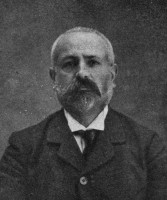
(1859 - 1909) ~ Francisco Ferrer : Father of Anarchist Schooling and Martyred Leader of Spanish Freethought : The growth of the Escuela Moderna and the wide distribution of its booklets infuriated the clergy. But for years there was little they could do beyond denouncing the school and pouring vituperation on Ferrer's personal life. (From : Murray Bookchin Bio.)
• "Those imaginary products of the mind, a priori ideas, and all the absurd and fantastical fictions hitherto regarded as truth and imposed its directive principles of human conduct have for some time past incurred the condemnation of reason and the resentment of conscience. The sun no longer merely touches the tips of the mountains; it floods the valleys, and we enjoy the light of noon." (From : "The Origin and Ideals of the Modern School," by F....)
• "Our teaching has nothing to do with politics. It is our work to form individuals in the full possession of all their faculties while politics would subject their faculties to other men." (From : "The Origin and Ideals of the Modern School," by F....)
• "Hence in the Modern School there will be no rewards and no punishments; there will be no examinations to puff up some children withe the flattering title of excellent, to give others the vulgar title of 'good', and make others unhappy with a consciousness of incapacity and failure." (From : "The Origin and Ideals of the Modern School," by F....)
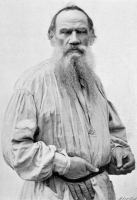
(1828 - 1910) ~ Leo Tolstoy : Father of Christian Anarchism : In 1861, during the second of his European tours, Tolstoy met with Proudhon, with whom he exchanged ideas. Inspired by the encounter, Tolstoy returned to Yasnaya Polyana to found thirteen schools that were the first attempt to implement a practical model of libertarian education. (From : Anarchy Archives.)
• "There are people (we ourselves are such) who realize that our Government is very bad, and who struggle against it." (From : "A Letter to Russian Liberals," by Leo Tolstoy, Au....)
• "You are surprised that soldiers are taught that it is right to kill people in certain cases and in war, while in the books admitted to be holy by those who so teach, there is nothing like such a permission..." (From : "Letter to a Non-Commissioned Officer," by Leo Tol....)
• "People who take part in Government, or work under its direction, may deceive themselves or their sympathizers by making a show of struggling; but those against whom they struggle (the Government) know quite well, by the strength of the resistance experienced, that these people are not really pulling, but are only pretending to." (From : "A Letter to Russian Liberals," by Leo Tolstoy, Au....)

(1853 - 1942) ~ Lucy Parsons : IWW Founder, Anarchist Activist, and Labor Organizer : In addition to defending the rights of African-Americans, Lucy spoke out against the repressed status of women in nineteenth century America. Wanting to challenge the notion that women could not be revolutionary, she took a very active, and often militant, role in the labor movement... (From : IWW.org.)
• "...we are willing to work for peace at any price, except at the price of liberty." (From : "The Principles of Anarchism," by Lucy E. Parsons.)
• "People have become so used to seeing the evidences of authority on every hand that most of them honestly believe that they would go utterly to the bad if it were not for the policeman's club or the soldier's bayonet. But the anarchist says, 'Remove these evidence of brute force, and let man feel the revivifying influences of self responsibility and self control, and see how we will respond to these better influences.'" (From : "The Principles of Anarchism," by Lucy E. Parsons.)
• "...concentrated power can be always wielded in the interest of the few and at the expense of the many." (From : "The Principles of Anarchism," by Lucy E. Parsons.)
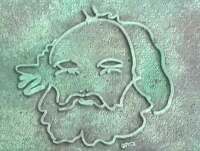
(1814 - 1876) ~ Mikhail Bakunin : Father of Anarcho-Collectivism : The originality of his ideas, the imagery and vehemence of his eloquence, his untiring zeal in propagandism, helped too by the natural majesty of his person and by a powerful vitality, gave Bakunin access to all the socialistic revolutionary groups, and his efforts left deep traces everywhere... (From : The Torch of Anarchy.)
• "...we seek a unification of society and equality of social and economic provision for every individual on this earth." (From : "Essay from Egalite July 31, 1869," by Mikhail Bak....)
• "The capitalists are by no means philanthropists; they would be ruined if they practiced philanthropy." (From : "The Capitalist System," by Mikhail Bakunin. This....)
• "The State is the authority, the rule, and organized power of the possessing class, and the make-believe experts over the life and liberty of masses. The State does not want anything other than the servility of the masses. At once it demands their submission." (From : "The Organization of the International," by Mikhai....)
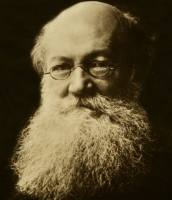
(1842 - 1921) ~ Peter Kropotkin : Russian Father of Anarcho-Communism : As anarchism's most important philosophers he was in great demand as a writer and contributed to the journals edited by Benjamin Tucker (Liberty), Albert Parsons (Alarm) and Johann Most (Freiheit). Tucker praised Kropotkin's publication as "the most scholarly anarchist journal in existence." (From : Spartacus Educational Bio.)
• "...all that is necessary for production-- the land, the mines, the highways, machinery, food, shelter, education, knowledge--all have been seized by the few in the course of that long story of robbery, enforced migration and wars, of ignorance and oppression..." (From : "The Conquest of Bread," by Peter Kropotkin, 1906.)
• "ANARCHISM, the name given to a principle or theory of life and conduct under which society is conceived without government - harmony in such a society being obtained, not by submission to law, or by obedience to any authority, but by free agreements concluded between the various groups, territorial and professional, freely constituted for the sake of production and consumption, as also for the satisfaction of the infinite variety of needs and aspirations of a civilized being." (From : "Anarchism," by Peter Kropotkin, from the Encyclop....)
• "Which side will you take? For the law and against justice, or for justice and against the law?" (From : "An Appeal to the Young," by Peter Kropotkin, 1880.)

(1921 - 2006) ~ Murray Bookchin : Father of Social Ecology and Anarcho-Communalism : Growing up in the era of traditional proletarian socialism, with its working-class insurrections and struggles against classical fascism, as an adult he helped start the ecology movement, embraced the feminist movement as antihierarchical, and developed his own democratic, communalist politics. (From : Anarchy Archives.)
• "Broader movements and issues are now on the horizon of modern society that, while they must necessarily involve workers, require a perspective that is larger than the factory, trade union, and a proletarian orientation." (From : "The Ghost of Anarcho-Syndicalism," by Murray Book....)
• "The social view of humanity, namely that of social ecology, focuses primarily on the historic emergence of hierarchy and the need to eliminate hierarchical relationships." (From : "The Crisis in the Ecology Movement," by Murray Bo....)
• "...real growth occurs exactly when people have different views and confront each other in order to creatively arrive at more advanced levels of truth -- not adopt a low common denominator of ideas that is 'acceptable' to everyone but actually satisfies no one in the long run. Truth is achieved through dialogue and, yes, harsh disputes -- not by a deadening homogeneity and a bleak silence that ultimately turns bland 'ideas' into rigid dogmas." (From : "The Crisis in the Ecology Movement," by Murray Bo....)
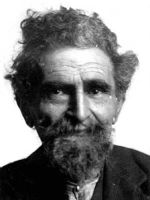
(1853 - 1932) ~ Errico Malatesta : Italian, Anarchist Intellectual, Anti-Capitalist, and Anti-Fascist : There have almost certainly been better anarchist writers, more skilled anarchist organizers, anarchists who have sacrificed more for their beliefs. Perhaps though, Malatesta is celebrated because he combined all of these so well, exemplifying thought expressed in deed... (From : Cunningham Bio.)
• "And tomorrow, in the revolution, we must play an active part in the necessary physical struggle, seeking to make it as radical as possible, in order to destroy all the repressive forces of the government and to induce the people to take possession of the land, homes, transport, factories, mines, and of all existing goods, and organize themselves so that there is a just distribution immediately of food products." (From : "The Anarchist Revolution," by Errico Malatesta.)
• "...the agelong oppression of the masses by a small privileged group has always been the result of the inability of the oppressed to agree among themselves to organize with others for production, for enjoyment and for the possible needs of defense against whoever might wish to exploit and oppress them. Anarchism exists to remedy this state of affairs..." (From : "Anarchism and Organization," Authored by Errico M....)
• "We want to make the revolution as soon as possible, taking advantage of all the opportunities that may arise." (From : "Revolution in Practice," by Errico Malatesta, fro....)