 Browsing By Tag "broken"
Browsing By Tag "broken"
Pronunciation : Bro"ken (bro"k'n)
Part of Speech : a.
Etymology : [From Break, v. t.]
Definition : 1. Separated into parts or pieces by violence; divided into fragments; as, a broken chain or rope; a broken dish.
2. Disconnected; not continuous; also, rough; uneven; as, a broken surface.
3. Fractured; cracked; disunited; sundered; strained; apart; as, a broken reed; broken friendship.
4. Made infirm or weak, by disease, age, or hardships. The one being who remembered him as he been before his mind was broken. G. Eliot. The broken soldier, kindly bade to stay, Sat by his fire, and talked the night away. Goldsmith.
5. Subdued; humbled; contrite. The sacrifices of God are a broken spirit. Ps. li. 17.
6. Subjugated; trained for use, as a horse.
7. Crushed and ruined as by something that destroys hope; blighted. "Her broken love and life." G. Eliot.
8. Not carried into effect; not adhered to; violated; as, a broken promise, vow, or contract; a broken law.
9. Ruined financially; incapable of redeeming promises made, or of paying debts incurred; as, a broken bank; a broken tradesman.
10. Imperfectly spoken, as by a foreigner; as, broken English; imperfectly spoken on account of emotion; as, to say a few broken words at parting. Amidst the broken words and loud weeping of those grave senators. Macaulay. Broken ground. (a) (Mil.) Rough or uneven ground; as, the troops were retarded in their advance by broken ground. (b) Ground recently opened with the plow. -- Broken line (Geom.), the straight lines which join a number of given points taken in some specified order. -- Broken meat, fragments of meat or other food. -- Broken number, a fraction. -- Broken weather, unsettled weather.
Source : Webster's Unabridged Dictionary, 1913

And Thou Too The Hurricane At the Grave in Waldheim Ut Sementem Feceris, Ita Metes The Dirge of the Sea I Am Love’s Ghost Life or Death The Toast of Despair Mary Wollstone Craft John P. Altgeld In Memoriam The Feast of Vultures The Suicide’s Defense Germinal Santa Agueda The Road Builders Ave Et Vale Marsh-Bloom “Light Upon Waldheim” Written — in — Red And Thou Too... (From : TheAnarchistLibrary.org.)
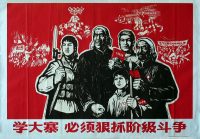
Some time ago, in one of my essays in "Record of Random Thoughts," I recorded a conversation I had had with a friend. I declared that a museum of the "Cultural Revolution" should be established. I did not have anything specific in mind, no formal project, but I was driven by a strong conviction that such a museum should be found, and it was the responsibility of every Chinese. I had just mentioned this, anticipating that others would add their support. I believe that the many who passed through the crucible of the "Cultural Revolution" could not remain silent. Each individual had a unique experience. But nobody can depict the "cowshed" prison as a paradise, nor depict inhuman massacre as a "Great Proletarian Revolution." Although our opinio... (From : CND.org.)
The following tales are, with one exception, taken from the second volume of Count L. N. Tolstoï's collected works, and are representative of his literary activity between 1852 and 1859. The first story, though only a fragment of a projected novel to be called "A Russian Proprietor," is perfect and complete in itself. One cannot help feeling that it is autobiographical; Count Tolstoï himself, it will be remembered, having suddenly quitted the University of Kazan, in spite of the entreaties of his friends, and retired to his paternal estate of Yasnaya Polyana, near Tula. The aunt whose letter is quoted in the first chapter must have been Count Tolstoï's aunt, mentioned in the second chapter of "My Confession." The "Recollections of a Scorer" and "Two Hussars" are both evidently reminiscent of Count Tolstoï's gambling-days. Both must have been suggested by some such terrible experience as that told of the count's gambling-debt in the Caucasus.

During my ninety days in the United States old friends and new, including people I had never met before, spoke much of my years in exile. It seemed incredible to them that I had been able to withstand the vicissitudes of banishment and come back unbroken in health and spirit and with my ideal unmarred. I confess I was deeply moved by their generous tribute. But also I was embarrassed, not because I suffer from false modesty or believe that kind things should be said about people only after their death, but rather because the plight of hosts of political exiles scattered over Europe is so tragic that my struggle to survive was hardly worth mentioning. The lot of political refugees, even prior to the war, was never free from stress and povert... (From : University of Berkeley.)