
Last Essay: "1967" This is Bertrand Russell's last manuscript. Untitled, it was annotated "1967" by Russell, at the age of 95, two or three years before he died. Ray Monk published it first in The Independent of London on the 25th anniversary of the Russell Archives. The essay's politics are uncannily prescient. The time has come to review my life as a whole, and to ask whether it has served any useful purpose or has been wholly concerned in futility. Unfortunately, no answer is possible for anyone who does not know the future. Modern weapons make it practically certain that the next serious war will exterminate the human race. This is admitted by all competent authorities, and I shall not waste time in proving it. Any man who cares what th... (From : mcmaster.ca.)

The Death Penalty La Peine de Mort Translated by Natalya Ratan and Virginia Anton. By Elisée Reclus I do not have the honor of being a Swiss Citizen and know only imperfectly the means to petition the removal of an article, but it is an issue of human agitation in all civilized countries As an international citizen I have the right to address this issue. Unfortunately I also am French and my motherland is also a country of executioners and the guillotine, that we have invented and use everyday Enemies of the death penalty. I must try to find their origins. Is if justifiable that it takes away from the right to self defense? If it is, it will be difficult to oppose it because we all have the right to self defense, against beasts and a... (From : Anarchy Archives.)

EARLY DAYS: Life at home and school in St. Petersburg. My bourgeois father and aristocratic mother. Jews and gentiles. I question my father about the Turkish prisoners of war begging alms in the streets. OUR FAMILY SKELETON: Strange rumors about my mother and her brother Maxim. Echoes of the Polish rebellion of 1863. I hear of the dreaded Nihilists and revolution. A TERRIFIED HOUSEHOLD: A bomb explodes as I recite my lesson in school. The assassination of Czar Alexander II. Secret groups in our class. Police search our house. Uncle Maxim is arrested for conspiring against the Czar's Life. The funeral of the dead Czar. A terrorized city. FAMILY TROUBLES: Rumors of my beloved Uncle Maxim's execution. My terrible grief. Death of my father. We ... (From : Anarchy Archives.)
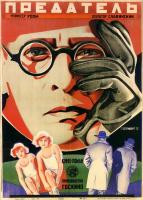
The month of October 1917 is a great historical watershed in the Russian revolution. That watershed consists of the awakening of the toilers of town and country to their right to seize control of their own lives and their social and economic inheritance; the cultivation of the soil, the housing, the factories, the mines, transportation, and lastly the education which had hitherto been used to strip our ancestors of all these assets. However, as we see it, it would be wide of the mark if we were to see all of the content of the Russian revolution encapsulated in October: in fact, the Russian revolution was hatched over the preceding months, a period during which the peasants in the countryside and the workers in the towns grasped the essenti... (From : NestorMakhno.info.)

My first acquaintance with Russian prisons was made in Siberia. It was in 1862. I had then just arrived at Irkutsk--a young Lieutenant of Cossacks, not fully twenty years of age,--and a couple of months after my arrival I was appointed secretary to a committee for the reform of prisons. A few words of explanation are necessary, I suppose, for my English readers. The education I had received was only what a military school could give. Much of our time had been devoted, of course, to mathematics and physical sciences; still more to the science of warfare, to the art of destroying men on battle-fields. But we were living, then, in Russia at the time of the great revival of thought which followed in our country the Crimean defeat; and even the education in military schools felt the influence of this great movement. Something superior to more militarism penetrated even the walls of the Corps des Pages. The Press had received some freedom of expres...

Meaning of Christian Doctrine, Understood by a Minority, has Become Completely Incomprehensible for the Majority of Men—Reason of this to be Found in Misinterpretation of Christianity and Mistaken Conviction of Believers and Unbelievers Alike that they Understand it—The Meaning of Christianity Obscured for Believers by the Church—The First Appearance of Christ's Teaching—Its Essence and Difference from Heathen Religions—Christianity not Fully Comprehended at the Beginning, Became More and More Clear to those who Accepted it from its Correspondence with Truth—Simultaneously with this Arose the Claim to Possession of the Authentic Meaning of the Doctrine Based on the Miraculous Nature of its Transmission—Assembly of Disciples as Described in the Acts—The Authoritative Claim to the Sole Possession of the True Meaning of Christ's Teaching Supported by Miraculous Evidence has Led by Logical Development to the Creeds of the Ch...

From Selected Writings on Anarchism and Revolution, P.A. Kropotkin, edited and translated by Martin A. Miller. The letter appears in Anarchy Archives with the permission of the editor and translator. Dmitrov (Moscow province) 21 December, 1920 Respected Vladimir Illich, An announcement has been placed in Izvestiia and in Pravda which makes known the decision of the Soviet government to seize as hostages SRs [Social Revolutionary party members] from the Savinkov groups, White Guards of the nationalist and tactical center, and [Pyotr] Wrangel officers; and, in case of an [assassination] attempt on the leaders of the soviets, to “mercilessly exterminate” these hostages. Is there really no one around you to remind your comrades and to... (From : Anarchy Archives.)

We have changed our address. The Link the new organ of the Law and Liberty League, edited by comrade Annie Besant and Mr. Ste-ad has turned us out of our old quarters We are now lodged under "We same roof as another new journal of Socialistic bent, comrade Bolas's "Leaflet" Newspaper." To both ventures we heartily wish a career of much service to the revolutionary cause. Every wedge driven into our rotten social structure hastens its downfall. More victims of "justice." Two poor and ignorant men condemned to fifteen years of living death for having last year entertained ideas which the prosecution admitted had since been completely abandoned. Granted for a moment that their intended action was evil. What can a man who meditates evil do more... (From : AnarchyArchives.)

Most Irishmen, in and out of Ireland, seem unanimous in condemning the brutality of the British government toward the leaders of the unsuccessful revolt. There is no need to recite here the atrocious measures of repression practiced by England toward her subject races. The arrogant and irresponsible tyranny of the British government in this relation is a matter of history. The point of interest just now is, what did the Irish people, or at least the Sinn Feiners, expect England to do in the given circumstances? I am not interested in the weak-kneed editors of Irish-American papers who bemoan, with all due decorum, Great Britain's "lack of generosity" in dealing with the captured Sinn Feiners, or who hide their cowardice by arguments about t... (From : Spunk.org.)
Contentedly peaceful the Monongahela stretches before me, its waters lazily rippling in the sunlight, and softly crooning to the murmur of the woods on the hazy shore. But the opposite bank presents a picture of sharp contrast. Near the edge of the river rises a high board fence, topped with barbed wire, the menacing aspect heightened by warlike watch-towers and ramparts. The sinister wall looks down on me with a thousand hollow eyes, whose evident murderous purpose fully justifies the name of "Fort Frick." Groups of ex cited people crowd the open spaces between the river and the fort, filling the air with the confusion of many voices. Men carrying Winchesters are hurrying by, their faces grimy, eyes bold yet anxious. From the mill-yard gape the black mouths of can non, dismantled breastworks bar the passages, and the ground is strewn with burning cinders, empty shells, oil barrels, bro ken furnace stacks, and piles of steel and iron. The place looks the aftermath of a sanguinary...

IN 1849 Feodor Dostoyevsky wrote on the wall of his prison cell the following story of The Priest and the Devil: "'Hello, you little fat father!' the devil said to the priest. 'What made you lie so to those poor, misled people? What tortures of hell did you depict? Don't you know they are already suffering the tortures of hell in their earthly lives? Don't you know that you and the authorities of the State are my representatives on earth? It is you that make them suffer the pains of hell with which you threaten them. Don't you know this? Well, then, come with me!' "The devil grabbed the priest by the collar, lifted him high in the air, and carried him to a factory, to an iron foundry. He saw the workmen there running and hurrying to and fro... (From : Anarchy Archives.)

Published Essays and Pamphlets Sacco and Vanzetti by Alexander Berkman and Emma Goldman [Published in The Road to Freedom (New York), Vol. 5, Aug. 1929.] THE names of the "good shoe-maker and poor fish-peddler" have ceased to represent merely two Italian workingmen. Throughout the civilized world Sacco and Vanzetti have become a symbol, the shibboleth of Justice crushed by Might. That is the great historic significance of this twentieth century crucifixion, and truly prophetic, were the words of Vanzetti when he declared, "The last moment belongs to us--that agony is our triumph." We hear a great deal of progress and by that people usually mean improvements of various kinds, mostly life-saving discoveries and labor-saving inventions, or ref... (From : Anarchy Archives.)

The present conditions in Russia are so desperate that it is a public duty to lay before this country a statement of these conditions, with a solemn appeal to all lovers of liberty and progress for moral support in the struggle that is now going on for the conquest of political freedom. In the struggle for freedom each country must work out its own salvation; but we should not forget that there exists a web of international solidarity between all civilized countries. It is true that the loans contracted by the heads of despotic states in foreign countries contribute to support despotism. But Russian exiles also know from their own experience how the moral support which the fighters for liberty have never failed to find in the enlightened portions of the civilized nations has been helpful to them, and how much it has aided them to maintain faith in the ultimate victory of freedom and justice. It has been decided, therefore, to issue the present statement,in...